Base Camp for the Location Shoot: Why Crews Are Buying a Canvas Tent
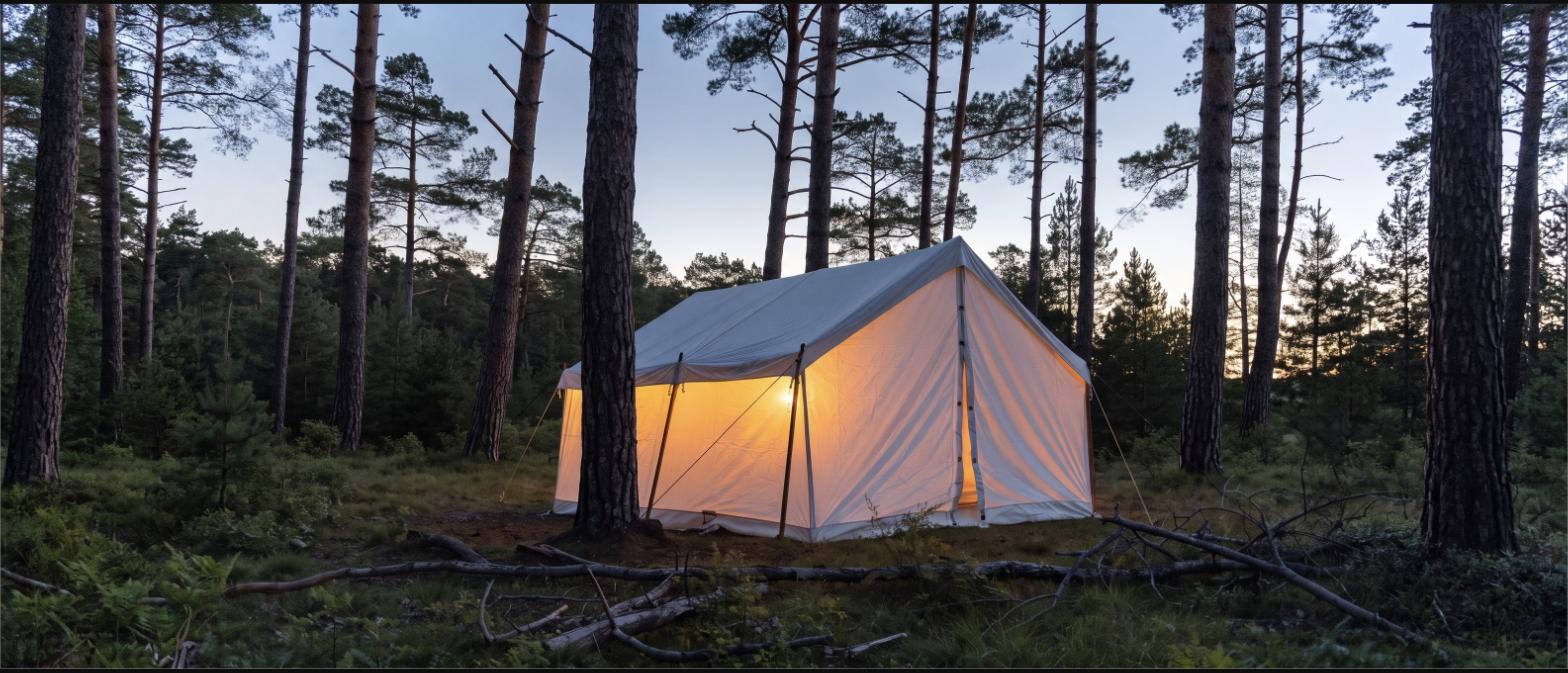
Every editorial shoot that leaves the studio runs into the same problem about an hour in. There is nowhere to put anything. Wardrobe is hanging off a car door, the model is changing behind a van, somebody’s coat is on wet grass, and the light you drove three hours for is doing something interesting for the next twenty minutes. Studios solve this with walls. On location, more crews are solving it with a canvas tent.
Why Canvas and Not Nylon
A modern nylon dome tent is built to be carried up a mountain, which means it is small, low and translucent. None of that helps a shoot. A canvas wall tent is the opposite: vertical walls, standing headroom, a rigid frame and a footprint big enough to work in.
The fabric matters as much as the shape. Cotton canvas breathes, so it does not run with condensation the way a coated nylon shell does at dawn. It also blocks light properly rather than glowing, which means it works as a changing room without anyone becoming a silhouette. And it takes a hot stove pipe, which nylon emphatically does not.
What It Actually Solves on Set
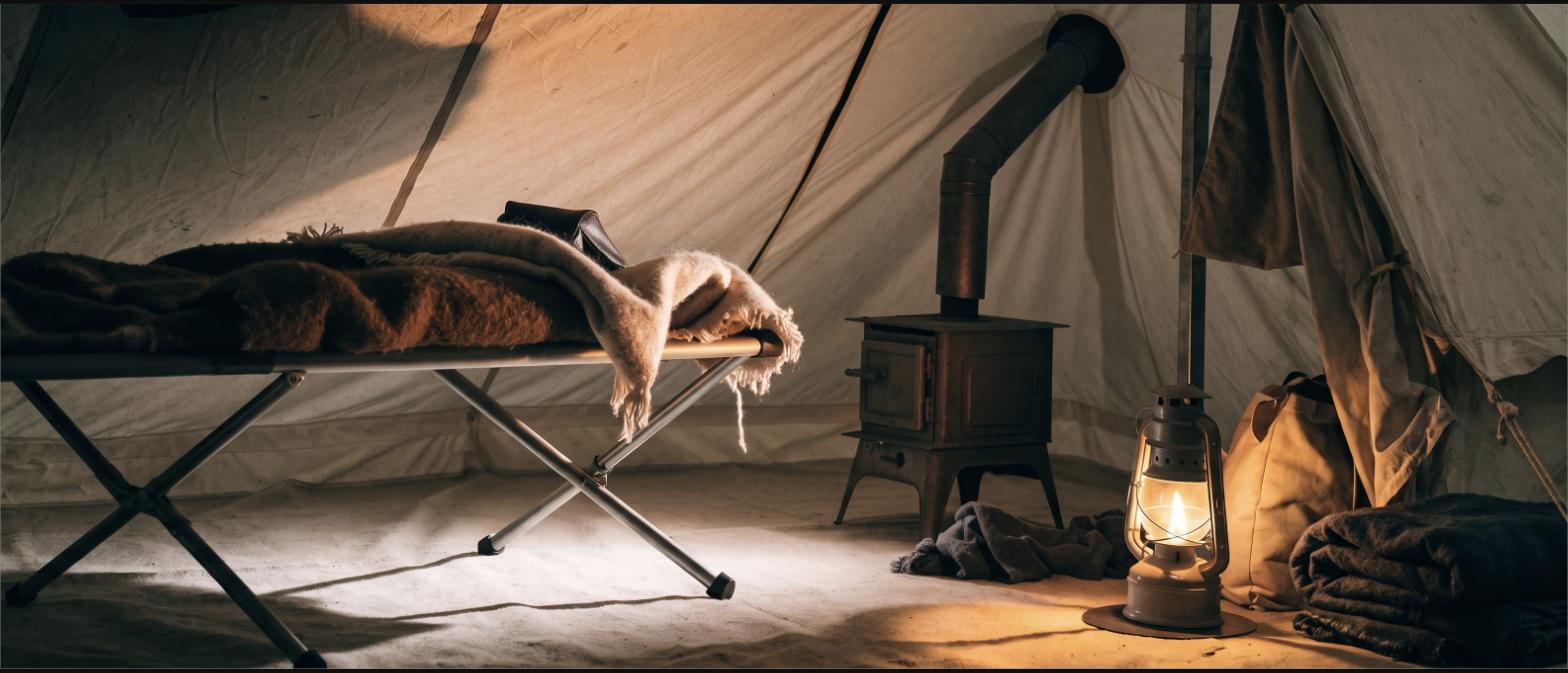
Wardrobe gets a floor and a rail instead of a car boot. Talent gets somewhere warm and private to change, which on a November shoot is not a luxury but the difference between usable frames and shivering. Hair and makeup get a windless space with somewhere to set a mirror. Gear stays dry when the weather turns.
It also photographs well, which is not nothing. A lit canvas tent at dusk is a better background than a production van, and a lot of crews end up shooting the base camp as much as the location.
What to Look For

Weight of canvas is the first number, usually given in ounces. Heavier lasts longer and blocks more light; lighter is easier to move. Most crews land in the middle. Check that seams are double-stitched and that grommets are set into reinforced webbing rather than straight through single-layer fabric, because that is where a tent fails in wind.
A stove jack is worth having even if you never fit a stove, and a sewn-in or separate floor decides whether wardrobe sits on canvas or on mud. Ranges of purpose-built canvas tent options make the trade-offs easy to compare before you commit.

Watch: Top 5 Things to Consider Before Purchasing a Canvas Wall Tent (YouTube)
Looking After It
Canvas has one enemy, and it is being packed away damp. Mildew will eat a tent from the inside and the smell never fully leaves. Dry it fully before it goes in the bag, even if that means putting it up in a car park the next morning. Re-proof it every couple of seasons and it will outlast several nylon tents.
For a brand that shoots outdoors more than once a year, it stops being camping equipment and starts being production kit.